
Metabolic Syndrome
Have you ever heard about Metabolic Syndrome?    In simple terms, someone can be diagnosed as having metabolic syndrome if they have 3 or more of the following signs and symptoms:
  • Central obesity 
  • Reduced high-density lipoprotein
  • Elevated triglycerides
  • Elevated blood pressure 
  • Elevated fasting blood glucose
Also, people who do have this cluster of signs and symptoms often have chronic diseases such as cardiovascular disease, arthritis, chronic kidney disease, schizophrenia, and several types of cancer. Just in the United States, there are over 3,000,000 new cases alone, with 47 million existing cases.   This "syndrome" is generally considered chronic and lifelong, but what are the criteria for all five risk factors?  Let’s dig down a little and find out a bit more about those markers. The National Institutes of Health guidelines define metabolic syndrome as having three or more of the following traits, including traits for which you may be taking medication to control: 
  • Large waist: A waistline that measures at least 35 inches (89 centimeters) for women and 40 inches (102 centimeters) for me. 
  • High triglyceride level: 150 milligrams per deciliter (mg/dL), or 1.7 millimoles per liter (mmol/L), or higher of this type of fat found in the blood. 
  • Reduced "good" or HDL cholesterol: Less than 40 mg/dL (1.04 mmol/L) in men or less than 50 mg/dL (1.3 mmol/L) in women of high-density lipoprotein (HDL) cholesterol 
  • Increased blood pressure: 130/85 millimeters of mercury (mm Hg) or higher.
  • Elevated fasting blood sugar: 100 mg/dL (5.6 mmol/L) or higher (pre-diabetic or type 2 diabetic). 
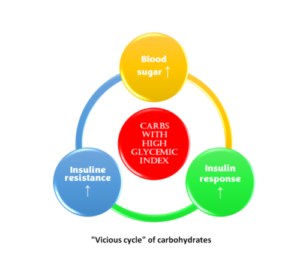
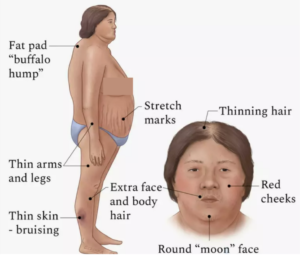
So, it's not really a disease; it's just a group of conditions that go together. Doctors commonly say there is no definitive cause. However, if we analyze each risk factor, we can start to unpick some of the underlying causes that are ‘pretty well known’. The first fact is that carbohydrates raise blood glucose and are composed of different forms of sugar. They're quickly absorbed and raise blood sugar. Also, foods that do this can be said to have a high glycemic index. Foods that raise blood sugar also trigger higher insulin responses; if insulin levels are high for a long time, the body develops insulin resistance.  Once you have insulin resistance, the cells don’t respond the same way to sugar, so the glucose rises, and we have a vicious cycle that eventually leads to type 2 diabetes.    When this cycle starts, the second fact comes into the picture. Insulin stimulates the conversion of blood glucose to fat, lipogenesis, and the fat that travels in the blood is called triglycerides; too much of that is the second criterion for diagnosing metabolic syndrome. The third fact is that insulin also slows down the body’s ability to use fat as a fuel source (lipolysis), so insulin promotes the growth of fat and prevents fat burning; hence, it is stored waistlines increase.  The last fact is that cortisol is a stress hormone that raises blood sugar, leads to insulin resistance, and is very closely associated with belly fat. For example, if a person has too much cortisol, a condition known as Cushing syndrome, they will develop insulin resistance, belly fat, and typical body shapes, as shown in the diagram.    If we correlate the five risk factors with carbs, insulin, and cortisol, we can establish that:  

  1. Cortisol and insulin resistance causes abdominal obesity.  
  2. Raised triglycerides are the result of insulin resistance and high blood sugar. 
  3. High blood pressure is primarily a function of stress and, combined with cortisol, becomes a component of metabolic syndrome by increasing blood pressure. 
  4. Elevated blood glucose results from carbohydrate consumption and high insulin, just like we see in the "vicious cycle" when consuming carbs.  
  5. Reduced HDL and increased LDL are a result of inflammation. 
To me, it’s evident that the underlying cause of the metabolic syndrome is insulin, inflammation, and stress. You need to focus on these three things to reverse or prevent getting any of the five risk factors for metabolic syndrome.  How can we treat metabolic syndrome?  Well, let's look at the standard treatment for metabolic syndrome. 
  1. For abdominal obesity, doctors tell you to lose weight and suggest a "healthy diet" that is high in grains and carbohydrates, rich in fruits, and low-fat dairy or non-fat dairy. However, now you know that all these things have a high glycemic index that will promote insulin resistance. 
  2. They also give you statin drugs for the triglycerides to decrease LDL and consequently help to increase HDL. However, statin drugs interfere with the liver's cholesterol production, an essential nutrient and one of the building blocks of your brain. They also interfere with the body's production of coenzyme Q10, the critical enzyme inside the mitochondria that helps the body produce energy. The statins will shut down energy production in the brain, heart, and liver because they're the most metabolically active. I personally wouldn't recommend taking statin drugs, but I'm not a medical doctor. So only you and your doctor can make that decision, and if you take any statin drugs, you must supplement with high doses of coenzyme Q10.
  3. For high blood pressure, doctors can prescribe many drugs, including prescribe beta-blockers, and for type 2 diabetes and high blood sugar, they'll prescribe insulin or insulin-promoting medication. 
You now see why metabolic syndrome is considered chronic and can't be cured; this problem starts with insulin, insulin resistance, and blood glucose. Yet most treatments promote insulin resistance, and eating a diet high in carbohydrates encourages insulin resistance, and even worse, the same happens with type 2 diabetes. When you take insulin or an insulin-mimicking drug, you trick yourself into becoming more insulin-resistant. The problem with metabolic syndrome is treating each risk factor (symptom) separately; this happens when we ignore the root cause- and focus strictly on treating symptoms. So how can you treat the root cause?  The first step is reversing insulin resistance, reducing the intake of foods that stimulate the most insulin and the frequency of meals that promote insulin. This means eating less sugar, fewer carbs, and, for the majority of people with metabolic syndrome, eating fewer calories.  Some options are low-carb keto and intermittent fasting.  I’ve tried everything, not because I have metabolic syndrome but because I like to experience any lifestyle modifications firsthand.  Personally, I think the easiest intervention most people can do is limit the time window in which they eat. This can lead to weight loss and usually means people don’t snack as much.  Next is reducing inflammation; in general, sugar, gluten in some grains, and insulin cause inflammation. Most people are sensitive or allergic to foods like grains and processed dairy, and in other cases, people are also susceptible to specific foods like strawberries, fish, nuts, or nightshades.  The third, and probably the most impactful thing, is stress because stress contributes to the rise in insulin and inflammation and produces cortisol. Which we now know are the 3 big underlying facts of metabolic syndrome. I hope people with metabolic syndrome see how a slow, sustainable change in their lifestyle, which focuses on reversing the things that trigger their insulin levels, inflammation, and cortisol level, can lead to better results with metabolic syndrome than just taking drugs for each symptom.  Sources:   https://www.cdc.gov/pcd/issues/2017/16_0287.htm   https://www.mayoclinic.org/diseases-conditions/metabolic-syndrome/symptoms-causes/syc-20351916    
Can social prescribing beat antidepressants?
A few months ago, I read an article about something called “Social Prescribing.” Essentially it is an alternative to the pharmaceutical and clinical solution currently offered for people who suffer from chronic diseases or who have mood disorders. Social prescribing comes from the understanding that not all the problems or factors impacting an individual’s health can be addressed through a standard care appointment, especially not in the 5-10 minute window that most family doctors are faced with.  Social prescribing blends the worlds of clinical and community health complement traditional care methods, and allows the patient or client to bring their interests and assets to the table to further their health goals.  Repeated studies show that exercise can treat mild to moderate depression as effectively as antidepressant medication but without the potential side effects of nausea, insomnia, and – unhelpfully – weight gain. We now know that moving your body promotes positive changes in the brain, including neural growth, reduced inflammation, and the release of endorphins, all of which help to energize your mind, body, and spirit.   Exercise can also bring a state of mindfulness; in my case, when I go to the gym or run, I don’t concentrate on anything else than what is in front of me. Many people describe this as a feeling of zen or being in the zone. I hear this often from surfers or people who play sports; the exercise helps them block out the mindless chatter that so often fills our heads.  An example of this is the health campaign “This Girl Can Run” by Sport England.  The idea of the program is to help women with depression, and diabetes gets active in order to manage anxiety and stress in their lives.  The program also has the added benefit of allowing the participants to create social ties that can become a support system to create health instead of just managing the symptoms with drugs. With an estimated 1 in 5 people taking antidepressants and usage increasing about 5% per year for the past ten years, the UK government has decided to do something about it.  Recently doctors have been discouraged from prescribing antidepressants to those with mild cases. Given the serious side effects of antidepressants, including emotional numbing, sexual dysfunction, and withdrawal effects when coming off them, this can be seen as a good thing. Instead, GPs are to suggest options such as meditation, talking therapies, and “social prescribing,” including exercise.  Across the pond in North America, the U.S. is trying to implement “social prescription” at the federal and state levels. One of the first government initiatives to rise to prominence is Compassionate Care Corps, a tele-support program run by the Department of Veterans Affairs.  If veterans feel isolated and lonely or want to engage in regular conversation, they can talk to their clinician or advocate to receive a referral to the program, which connects them with a volunteer. Most volunteers are from veteran service organizations, and many are veterans themselves. The volunteers are trained in topics like compassion, empathy, support, privacy, and confidentiality, and screeners are used when matching veterans with volunteers with similar interests. Around 1,000 veterans are participating, and over 100 VA sites are utilizing the program. Of course, the programs have their critics.  Lack of evidence of effectiveness is often quoted. Still, if the doctors or people working as “social prescribing link workers,” as they are known in the UK, have adequate training, this approach can be effective and have better long-term health outcomes for patients and the community.  As we emerge from an unprecedented period of social isolation, the need for innovative ways to reconnect to our health and our support networks is more important than ever.  For example, I recently worked with someone who is a carer for an immune comprised partner.  Together they have decided to shelter themselves from large crowds to avoid either one catching a transmittable disease.  This has led to decreases in fitness and contact with the community. My challenge was to find a way for her to be active when she really didn’t have the motivation to be active.  We devised a plan for her to visit her cousin, who lives in the next town, once a week for a dog walk.  The benefits are that they get to walk outside for over an hour and, here’s the important bit, strengthen their friendship and social ties. This is social prescribing. It shifts the questions providers ask away from “What is the matter with you?” to “What matters to you? Sources: https://visiblenetworklabs.com/2022/03/29/social-prescribing-in-the-usa/  https://www.telegraph.co.uk/health-fitness/mind/women-given-boxing-gloves-ballet-shoes-instead-antidepressants/ 
Is vitamin D linked to pain and inflammation?
Vitamin D is fascinating It’s a nutrient we can eat and a hormone our bodies make, and it helps keeps our bones healthy by aiding in the absorption and maintenance of calcium and phosphorus.  The catch is few foods naturally contain vitamin D. It’s found in fatty fish, egg yolks, yogurt, and beef liver. However, some foods (usually for preservative reasons) are fortified with vitamin D (think cereals, milk, and juices). With this in mind, for most people, the best way to get enough vitamin D is by taking a supplement. These supplements are available in 2 forms: vitamin D2 (" ergocalciferol or pre-vitamin D) and vitamin D3 ("cholecalciferol"). Both are naturally occurring forms produced in the presence of the sun's ultraviolet-B (UVB) rays, but D2 comes from plants and fungi and D3 in animals. Are low levels of vitamin D a public health problem? Worldwide, vitamin D deficiency is a significant public health concern.  The problem is in all age groups, even in countries with low latitudes, where UV radiation is usually adequate to prevent this deficiency.  Although the primary source of vitamin D production happens in the skin, many people have insufficient sunlight exposure. The reason is that they live in places where sunlight is limited in winter or spend so much time living inside that they can go days or even weeks without seeing the sun. When I lived in Canada, the winter was about six months long.  Even though Calgary was a sunny place, I would drive to work in the dark, work all day and drive home in the dark, not once going outside; not an excellent example from a health professional! What are the health risks of low levels of Vitamin D? Vitamin D deficiency in adults has increased the risk of developing various communicable and non-communicable diseases. For example, inadequate vitamin D levels have been linked to colon cancer, breast cancer, cardiovascular disease, diabetes mellitus, multiple sclerosis, rheumatoid arthritis, Parkinson's disease, and tuberculosis In addition, in the young, low levels can cause poor mineralization of the collagen matrix in children's bones leading to growth retardation and bone deformities known as rickets. In adults, vitamin D deficiency induces secondary hyperparathyroidism, which causes bone matrix loss and minerals loss, thus increasing the risk of osteoporosis and fractures. A weak bone matrix in adults can also lead to painful bone diseases like osteomalacia and osteoporosis. These conditions can cause muscle weakness, increase the risk of falling and fractures, and severely affect overall health and well-being (1).  What are the causes of low levels of Vitamin D? In the United Kingdom and similar latitudes, seasonal variation in the availability of sunlight, specifically UVB, affects the entire population.  The time of year when this is the lease is the end of  September to early March (autumn and winter in the Northern Hemisphere). During these seasons, 95% of healthy white adults and 83% of adolescents get poor light exposure (2).  In America, up to 40% of U.S. adults have insufficient vitamin D levels, which simply means they don’t have enough, and around 6% are deficient in vitamin D. This data is worrying as the fix should be relatively simple…sunlight or supplements.  I can see how this advice is at odds with the significant public health drive of the past few decades to reduce sun exposure because of increases in skin cancer. Leading to the general advice to minimize sun exposure at times when UVB is highest and encourage sun use protective measures when outside. Finding the right balance between sufficient sun exposure without the risk of skin cancer is complex; For those who like data, here it is: What is the optimal amount? Current research agrees that a circulating level of 25-hydroxyvitamin D of more than 75 nmol/L, or 30 ng/mL, is a healthy amount. In the absence of adequate sun exposure, at least 800–1000 IU of vitamin D3/d may be needed to achieve this in children and adults. Vitamin D2 may be equally effective in maintaining circulating concentrations of 25-hydroxyvitamin D when given in physiologic concentrations (3). Is vitamin D deficiency linked to inflammation and pain? Beyond its critical function in bone health, vitamin D also plays an essential role in the immune system.  Primarily it helps reduce inflammation by modulating cytokines and inhibiting the proliferation of pro-inflammatory cells.  However, it’s unclear if supplementation of vitamin D does the same thing for these pathways as getting it the old-fashioned way, via the sun. 2021 research from the University of South Australia, recently published in the International Journal of Epidemiology, examined random genetic data of 294,970 unrelated participants with White-British ancestry from the U.K. Biobank. They looked to show a correlation between vitamin D and C-reactive protein levels, one of the most widely used inflammatory biomarkers in clinical practice (4). The researchers found evidence supporting the theory that vitamin D levels impact C-reactive protein levels (an indicator of inflammation), meaning that lower vitamin D equals more C-reactive protein. The study's results suggest that correcting a person’s vitamin D deficiency is likely to reduce inflammation and mitigate the risk or severity of chronic illnesses with inflammatory components. Therefore, the inflammation caused by vitamin D deficiency is reversible if vitamin D concentrations go back to normal levels. With this in mind, getting your vitamin D levels is a must if you have high levels of inflammation or even a chronic disease.  But, if they are low, it doesn't mean that simply popping a vitamin D supplement will be a definitive way to prevent inflammation. Looking at all aspects of a healthy lifestyle and getting plenty of sunshine is still the best way to get enough vitamin D.  Vitamin D deficiency might play a role in the progression and occurrence of Scoliosis. The mechanism behind idiopathic Scoliosis and its progression isn't fully understood yet; however, more research and theories on genetic and non-genetic factors have been proposed to cause idiopathic Scoliosis in the past 20 years.  Among non-genetic factors is bone mineral density (BMD), as bone quality plays a vital role in the derangement of bony mechanical stability. Osteoporosis is known to lower bone strength, and the prevalence of adult-onset idiopathic Scoliosis with osteoporosis is about 20%–38% (5). Vitamin D plays an essential role in maintaining a healthy mineralized skeleton. It helps with calcium absorption, and patients with vitamin D deficiency can have difficulties producing new bone and maintaining bone strength (6). Studies have shown that people with idiopathic scoliosis with an average bone density have less or more moderate curves than those with a reduced bone density. It seems that people with low vitamin D levels might have a higher chance of developing scoliosis, and if they already have scoliosis, they will have an increased chance of a more severe curve due to changes in their bone health. Vitamin D is one of the body's often overlooked yet essential substances. As we evolved, we would have been exposed to vast amounts of sunlight; through evolution, we would not have needed to develop the physiology to produce it inside our bodies.  However, our modern style of living is vastly different, the amount of sun the vast majority of us are exposed to daily, and as a result, our health is suffering.  There is an easy fix, go outside to get some light on your skin, and if that isn’t possible, take a supplement.  
  1. https://pubmed.ncbi.nlm.nih.gov/16251641/ 
  2. https://www.ncbi.nlm.nih.gov/pmc/articles/PMC6121420/
  3. https://pubmed.ncbi.nlm.nih.gov/18400738/
  4. https://www.ncbi.nlm.nih.gov/pmc/articles/PMC4160567/
  5. https://asianspinejournal.org/journal/view.php?doi=10.31616/asj.2018.12.6.1127
  6. https://www.ncbi.nlm.nih.gov/pmc/articles/PMC6284127/#b6-asj-2018-12-6-1127 
How light is your bedroom?
Exposure to artificial light at night is almost globally endemic, particularly in industrialized countries. We have evolved to be very sensitive to a diurnal pattern of light and dark.  This rhythm plays a vital role in timing many behaviors and physiological functions. We are now beginning to understand more about how exposure to light in the evening and night can harm human health and well-being. Emerging evidence indicates that light exposure plays a role in human metabolic regulation, with evening light exposure messing with a finely tuned system, including decreased glucose tolerance and insulin sensitivity (1, 2). In line with this, blue-enriched light exposure in the morning and evening has been shown to lower glucose metabolism, increasing insulin resistance compared to dim light exposure (3).  What may be surprising to some is that data from a recent study noted that, compared to no light exposure during sleep, any self-reported artificial light exposure in the bedroom during sleep (small nightlight in the room, light from outside space, or television/light in room) adds to obesity in women (4). Obesity was highest in those who reported sleeping with television or light on in the bedroom. These findings suggest that light in the bedroom during nighttime sleep may negatively influence metabolic regulation.  I don’t like sleeping in a room with LED lights all night, and I’m constantly unplugging things in hotel rooms or at friends' houses. Night time light exposure also appears to have a direct effect on glucose regulation independent of sleep loss, as a study that subjected healthy male individuals to sleep deprivation in the dark or sleep deprivation with night time light exposure (5). This study showed that a whole night of sleep deprivation with nighttime light exposure increased levels of insulin and glucagon-like peptide-1, increased insulin resistance, and reduced nighttime melatonin; these changes did not occur under conditions of sleep deprivation in darkness.  So those all-nighters you pulled when you were young or may still do now really affected you! How light is your bedroom? We all know it is hard to sleep when the lights are on. This study (6) suggests that even having some ambient light in the bedroom at night can be bad for us. The study tested the hypothesis that acute exposure to light during nighttime sleep adversely affects next-morning glucose homeostasis and whether this effect occurs via reduced sleep quality, melatonin suppression, or sympathetic nervous system (SNS) activation during sleep. A total of 20 young adults participated in this parallel-group study design. The light room condition included one night of sleep in dim light (<3 lx) followed by one night of sleep with overhead room lighting (100 lx). The dark light condition included two consecutive nights of sleep in dim light.  Measures of insulin resistance were higher in the light room versus dim light room, and Melatonin levels were similar in both situations. The heart rate was higher in the light condition, and the heart rate variability was lower (higher sympathovagal balance) during sleep compared to the dim light condition. The primary finding of this study is that exposure to a single night of light in your room (100 lx) during sleep can increase measures of insulin resistance the following day. A proposed mechanism to explain the change in glucose metabolism from nighttime light exposure is via light-induced changes to a phase shift of the melatonin rhythm (7).  A phase shift occurs when the body delays the production of a hormone called melatonin. For example, when you travel through a time zone, the body has to shift its hormone production to match the day-night cycle.  However, if there is light in the room at night, the body doesn’t get a clear picture of what precisely the day-night process is where you are.  The association between altered melatonin levels and alterations in glucose regulation may be explained by evidence that melatonin plays a role in the secretion and action of insulin, it's an important hormone, and we need it to be released at the correct times! It’s been shown that light exposure, even of moderate intensity, while you are sleeping can produce a phase shift in the internal circadian system. This change in the ‘central clock’ of the body could lead to a misalignment between the central clock and peripheral clocks in metabolic tissues, with consequent problems regulating glucose.  Could the increase in light at night be a factor in the increasing levels of abdominal obesity, insulin‐resistant glucose metabolism, dyslipidemia, and increased blood pressure? I think so. Therefore, it’s possible that making our bedroom darker could be a cheap and easy tool to use in the fight against heart disease.  I always try and get my room as dark as possible to limit the effect of light exposure on my sleep, and I would highly recommend it to others. I track my Heart Rate Variability, Heart rate, and many other metrics with my Whoop.  This simple device measures my nighttime recovery, and I’ve noticed that it is poor when I sleep in a light room (while traveling) compared to black-out rooms!
  1. https://academic.oup.com/edrv/article/35/4/648/2354673
  2. https://smw.ch/article/doi/smw.2020.20273 
  3. https://journals.plos.org/plosone/article?id=10.1371/journal.pone.0155601 
  4. https://jamanetwork.com/journals/jamainternalmedicine/article-abstract/2735446 
  5. https://physoc.onlinelibrary.wiley.com/doi/full/10.1111/j.1469-7793.2000.00695.x 
  6. https://www.pnas.org/doi/full/10.1073/pnas.2113290119?_kx=t4If0nOfpNdZ-HC1xYBPDO82IcYl_wFMhDzAApaDTNA%3D.HKMsXE
  7. https://academic.oup.com/jcem/article/96/3/E463/2597236