Coffee Dislike and menopause
I don’t like coffee. I know I’m not alone in this, but when I mention my dislike to people who like coffee, they often look at me as though I have taken their teddy bear, especially if I say it before they have had their first cup! I don't know exactly if there was an incident that turned me off coffee, but it might be because years ago, I read a study that noted that if teens drank coffee, they were more likely to smoke marijuana and take other recreational drugs. The authors concluded that coffee could be considered a gateway drug. I guess somewhere deep down, that stuck with me, and I developed a dislike for it. However, recently I’ve spent a lot of time in Central America, where coffee is one of the major exports, and I thought it was time to rehabilitate myself…in reverse…and get addicted to the stuff. To do that, I decided the best way would be to go to the source, stay on a coffee farm for a few days, and get to know the whole cycle from seed to cup.  However, even though the producers assured me it was the best coffee in the region, I still have yet to get it. No matter how hard I tried, I was not too fond of the taste, the jitters, the increased digestional speed, or the sleep interruption. Also, I was a little disappointed to think about the massive exploitation and shear use of energy that goes into growing, harvesting, cleaning, cooking, and grinding the black stuff before it ends up in someone's paper cup in a country that can’t grow it in the first place. All this serves as a prologue to some papers I recently came across that add some backing to my dislike of drinking the stuff. Firstly a study in the American Journal of Clinical Nutrition (1) noted that ; “Daily consumption of caffeine in amounts equal to or greater than that obtained from about two to three servings of brewed coffee may accelerate bone loss from the spine and total body in women with calcium intakes below the recommended dietary allowance of 800mg”. Interestingly this effect was countered if they added milk, but...some like it black…and that could be a problem if you aren’t a fan of diary.”. Another study in the same journal (2) found a similar result in elderly women and went further by identifying a particular genotype at play. Still, unless you have had your DNA tested, you wouldn’t know if you had it…. (tt genetic variant of VDR for those who are interested).  This got me thinking, what else does coffee do to us? We all know in addition to its addictive properties, it causes bad breath, mood swings, high blood pressure, and sleep disruption. Still, I didn’t realize that its acidity can also break down the enamel of your teeth, leading to an increased risk of cavities (3). Lastly, because I don’t want to labor the point, as per the National Institute of Diabetes and Digestive and Kidney Diseases, caffeine is a known acid reflux trigger, which is especially important to keep in mind if you deal with gastroesophageal reflux disease (GERD), this can have some terrible consequences. I’m fully aware that some people will counter my dislike with their own opinion and back it up by stating things like; caffeine has been shown to increase endurance and alertness and maybe even help heart health. They might even look at those studies above and point out that if you are a healthy male or premenopausal female, there is probably no risk of bone loss or any detrimental effects…While those things might be true, I can 100% say that whatever benefit other people perceive doesn’t help me overcome my dislike…I’m a glass of water in the morning, guy, and always will be.  Sources:
  1. https://pubmed.ncbi.nlm.nih.gov/8092093/
  2. https://pubmed.ncbi.nlm.nih.gov/11684540/
  3. https://www.belchertown-dentist.com/blog/coffee-dental-health/
 
Processed food, Inflammation and Depression
Recently I’ve written a couple of articles about obesity and metabolic syndrome and their adverse health consequences.  With just 12% of Americans being metabolically healthy, the statistics don’t paint a pretty picture (1). I see a future with many people developing ‘diseases of modern living which, sadly,  are largely preventable.  I’m also apprehensive about our children in the US, one out of six children is obese, and one out of three children is overweight or obese.  In 2012 the WHO called childhood obesity “one of the most serious public health challenges of the 21st century,” mainly because when young people are overweight, they have an increased chance of being overweight or obese into adulthood, increasing their risk of disease and disability later in life. As anyone who has looked at this topic for longer than an Instagram Reel knows, many factors go into people becoming overweight. But on the individual scale, how well do we understand weight gain, and how well do we know ourselves? Recently someone told me that people who are overweight know they are overweight and don’t need to be reminded about it. That’s true, but I’ve also noticed that many people don’t understand why they are overweight and don’t know what to do about it. I will share with you some interesting angles to the problem that not many people are talking about. To put them in context, let's talk about food and evolution. Our brains are wired to seek out salt and sugar. That’s because we need salt for many metabolic processes and calories for all our bodily functions. In nature, foods that are sweeter tend to have more calories.  This drive for salt, sugar, and to some extent, fat is a hard-wired biological fact, and it’s how we are built.  Modern food companies know this. They make things taste good by adding large amounts of sugar and salt.  Check the back of a can of Coca-Cola; you’ll be surprised to see salt in there!  This abundance of high calories and high-salt food messes with our brains (and bodies) because we have never been exposed to so much food in our evolutionary history. We have evolved to live with limited food supplies to survive times of hardship by storing extra calories as fat and when times are good.  According to our physiology, we are now in a constant time of plenty, and if we eat more calories than we need, we keep putting down ‘reserves’. So that when the party finishes, we’ll have a little extra around the belly to keep us going…but the party never ends.  Governments and tabloids tell us to make better food choices, but we don’t…why changing what we eat is difficult to do? In my last piece, I talked about that a little; besides cultural, social, and familial pressure, one possible explanation could be inflammation. In 2019, researchers presented this idea when they analyzed how inflammation could affect decision-making (4). We know that modern diets, which contain a lot of ultra-processed foods, raise inflammation, which, the researchers showed, can affect our decision-making.  However, the relationship goes both ways, meaning that many unhealthy decisions (smoking, drinking too much, poor food choices, decisions that cause stress and hardship) also cause inflammation, making it harder to make healthy decisions. The good news is that if we set ourselves up for success (finding an accountability partner, getting the whole family on board, switching things at work, or hiring a coach/trainer), it is possible to reverse inflammation. Or vice versa, changing the food, which then changes your impulses. Following that study, this recent article explores the connection between eating a highly processed diet and adverse mental health symptoms like depression and anxiety, which many say is part of why they eat…comfort eating (5). The researchers noticed a dose-response relationship, meaning the more junk food a person ate, the more their mental health was affected. Conversely, the same happens in the opposite direction, with the more whole food a person eats is better for their mental health. Although the study doesn’t discuss children, I feel this is a massive problem for them. About 2.5% of children are on Ritalin for ADHD when really they might just be disconnected from a whole-food diet. The same is true for the 10% of schoolchildren diagnosed with anxiety. I see it in my own family, and I see it in my children's friends. Years ago, my osteopathic clinic back in Canada used to run summer camps. I always found it interesting to see what the kids brought to eat for lunch and then their subsequent behavior in the afternoon. Sure, it’s only my observation, but the kids who appeared to have the most compassion for other kids and engaged in the activities weren’t eating white bread, peanut butter, and jam sandwiches!  Instead, they had whole food, carrots, broccoli, eggs, and small portions of fish or meat.  I remember one kid used to bring sushi to camp every day; amazing! Highly processed foods leading to poor impulse control and depression are only a small component of why we overeat, but they are ones that many people aren’t aware of.  The apparent factors of sleep, stress management, exercise, food quantity, and timing are more noticeable. Still, when coaching someone for weight loss, I take a lifestyle approach that considers all of the above…remember Your Lifestyle Is Your Medicine. 
  1. https://www.liebertpub.com/doi/10.1089/met.2018.0105
  2. Ogden CL, Carroll MD, Kit BK, Flegal KM. Prevalence of obesity and trends in body mass index among US children and adolescents, 1999-2010. JAMA. 2012;307:483-90.
  3. World Health Organization. Global strategy on diet, physical activity, and health: childhood overweight and obesity. Accessed March 9, 2012.
  4. https://www.ncbi.nlm.nih.gov/pmc/articles/PMC6426921/?_kx=t4If0nOfpNdZ-HC1xYBPDO82IcYl_wFMhDzAApaDTNA%3D.HKMsXE
  5. https://www.cambridge.org/core/journals/public-health-nutrition/article/crosssectional-examination-of-ultraprocessed-food-consumption-and-adverse-mental-health-symptoms/CD2C496A199CAB4A9056C00DB5F8AFDE 
Obesity, can we blame it on hormones?
I put a post out last week where I highlighted the connection between neck pain and abdominal obesity. This made me think more about the topic as I see the expanding waistlines of many of my friends and most of my family. This trend scares me….literally…I recently had a friend come and stay with me who I hadn’t seen for 15 years. Part of the reason we spent time with each other after so long was that he wanted to address his weight gain. We ended up playing a game of pickleball, like miniature tennis, and he struggled with his fitness, and I genuinely thought he could have a heart attack. Images of me calling his wife flashed through my head, and I felt stupid for pushing him during the game. Luckily my fears weren’t realized, but this problem will only worsen. In the US, the number of obese people is expected to rise to just under 50% by 2030 (1). This public and personal health crisis must be addressed on an individual and, where possible, at a general level. There are different types of obesity, and the one I mentioned above, central obesity, is more serious regarding related increases in many health problems and early death. (2) Some forms of obesity can come from hormonal changes, but the percentage of cases of hypothyroidism, Cushing, and Hypogonadism don’t explain the rapid increase in patients over the last 30 years. However, we are learning now through research that excess body fat changes hormones which can make it hard to lose weight, but these hormonal changes are a consequence, not a cause, as they tend to normalize with weight loss (4). Doctors aren’t equipped or trained well in advising patients on how to lose weight, and most tend to ignore it, pushing the problem, increased risk of diabetes, heart attacks, strokes, and some cancers further down the line. Some people might think it’s easy for me to talk about obesity because I’m slim and have some sort of genetic ability to stay thin. Well, genetics play a small role in obesity but as everyone who has ever spent time with me says…” You don’t eat enough .” My usual reply is that I eat the right amount, considering I’m about the same weight I was 20 years ago. Yet, when I spend time in Canada or the UK on holiday, I put on weight, usually about 5-10lbs in a month. That’s mainly because I’m eating out or people are cooking for me, and I’m not in complete control of what I’m eating as I am at home. If I stayed a year with no change in those eating habits, I might just put on 30 lbs, and that’s what I see with my peer group once skinny athletic men are now walking around with their rotund waistlines as a source of pride, maybe even status. The question for me is how do I bring up the topic of weight gain or loss without being accused of fat shaming? When patients come to me for advice, it’s easy I use a lifestyle medicine approach which allows me to help patients and clients see the connection between things that are not commonly discussed as causes of obesity, namely, Disrupted sleep pattern (5) Timing of food eaten (6) Stress levels and how to manage them (7) Environment (3) But when it’s my friends, do I stand by and ignore the fact that some support and encouragement may be the key to preventing stroke, heart attack, and some cancers? You see, the environment is a particular concern of mine. As mentioned, I’ve seen how obesity can spread through social networks. I’ve seen certain groups of people collectively become obese over the years. The study quoted here highlights this very well, “The study found that when an individual becomes obese, the chances that a friend of theirs will become obese increase by 57 percent. Their siblings have a 40 percent increased risk of obesity, and their spouse a 37 percent increased risk”. Obesity is a multifactorial problem that needs to be addressed in a multifactorial way. Hormones play a small role in the current epidemic. Still, solid support from healthcare practitioners can help people tackle this problem and save lives, unnecessary suffering, and money. Sources: (1) https://www.nejm.org/doi/full/10.1056/NEJMsa1909301?query=featured_home (2) https://www.hsph.harvard.edu/obesity-prevention-source/obesity-causes/ (3) https://www.endocrine.org/patient-engagement/endocrine-library/obesity (4) https://www.ncbi.nlm.nih.gov/books/NBK279053/ https://www.endocrine.org/patient-engagement/endocrine-library/obesity (5) https://www.hsph.harvard.edu/nutritionsource/sleep/ (6) https://www.hsph.harvard.edu/nutritionsource/healthy-weight/diet-reviews/intermittent-fasting/ (7) https://www.amymyersmd.com/article/cortisol-and-weight-gain/ (8) https://hms.harvard.edu/news/obesity-spreads-through-social-networks

Metabolic Syndrome
Have you ever heard about Metabolic Syndrome?    In simple terms, someone can be diagnosed as having metabolic syndrome if they have 3 or more of the following signs and symptoms:
  • Central obesity 
  • Reduced high-density lipoprotein
  • Elevated triglycerides
  • Elevated blood pressure 
  • Elevated fasting blood glucose
Also, people who do have this cluster of signs and symptoms often have chronic diseases such as cardiovascular disease, arthritis, chronic kidney disease, schizophrenia, and several types of cancer. Just in the United States, there are over 3,000,000 new cases alone, with 47 million existing cases.   This "syndrome" is generally considered chronic and lifelong, but what are the criteria for all five risk factors?  Let’s dig down a little and find out a bit more about those markers. The National Institutes of Health guidelines define metabolic syndrome as having three or more of the following traits, including traits for which you may be taking medication to control: 
  • Large waist: A waistline that measures at least 35 inches (89 centimeters) for women and 40 inches (102 centimeters) for me. 
  • High triglyceride level: 150 milligrams per deciliter (mg/dL), or 1.7 millimoles per liter (mmol/L), or higher of this type of fat found in the blood. 
  • Reduced "good" or HDL cholesterol: Less than 40 mg/dL (1.04 mmol/L) in men or less than 50 mg/dL (1.3 mmol/L) in women of high-density lipoprotein (HDL) cholesterol 
  • Increased blood pressure: 130/85 millimeters of mercury (mm Hg) or higher.
  • Elevated fasting blood sugar: 100 mg/dL (5.6 mmol/L) or higher (pre-diabetic or type 2 diabetic). 
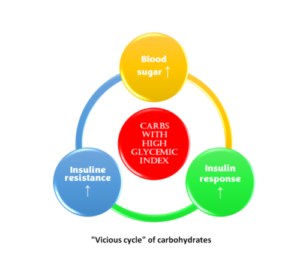
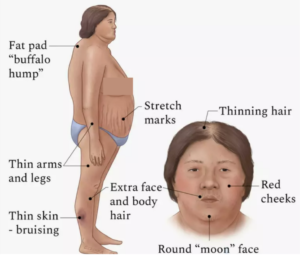
So, it's not really a disease; it's just a group of conditions that go together. Doctors commonly say there is no definitive cause. However, if we analyze each risk factor, we can start to unpick some of the underlying causes that are ‘pretty well known’. The first fact is that carbohydrates raise blood glucose and are composed of different forms of sugar. They're quickly absorbed and raise blood sugar. Also, foods that do this can be said to have a high glycemic index. Foods that raise blood sugar also trigger higher insulin responses; if insulin levels are high for a long time, the body develops insulin resistance.  Once you have insulin resistance, the cells don’t respond the same way to sugar, so the glucose rises, and we have a vicious cycle that eventually leads to type 2 diabetes.    When this cycle starts, the second fact comes into the picture. Insulin stimulates the conversion of blood glucose to fat, lipogenesis, and the fat that travels in the blood is called triglycerides; too much of that is the second criterion for diagnosing metabolic syndrome. The third fact is that insulin also slows down the body’s ability to use fat as a fuel source (lipolysis), so insulin promotes the growth of fat and prevents fat burning; hence, it is stored waistlines increase.  The last fact is that cortisol is a stress hormone that raises blood sugar, leads to insulin resistance, and is very closely associated with belly fat. For example, if a person has too much cortisol, a condition known as Cushing syndrome, they will develop insulin resistance, belly fat, and typical body shapes, as shown in the diagram.    If we correlate the five risk factors with carbs, insulin, and cortisol, we can establish that:  

  1. Cortisol and insulin resistance causes abdominal obesity.  
  2. Raised triglycerides are the result of insulin resistance and high blood sugar. 
  3. High blood pressure is primarily a function of stress and, combined with cortisol, becomes a component of metabolic syndrome by increasing blood pressure. 
  4. Elevated blood glucose results from carbohydrate consumption and high insulin, just like we see in the "vicious cycle" when consuming carbs.  
  5. Reduced HDL and increased LDL are a result of inflammation. 
To me, it’s evident that the underlying cause of the metabolic syndrome is insulin, inflammation, and stress. You need to focus on these three things to reverse or prevent getting any of the five risk factors for metabolic syndrome.  How can we treat metabolic syndrome?  Well, let's look at the standard treatment for metabolic syndrome. 
  1. For abdominal obesity, doctors tell you to lose weight and suggest a "healthy diet" that is high in grains and carbohydrates, rich in fruits, and low-fat dairy or non-fat dairy. However, now you know that all these things have a high glycemic index that will promote insulin resistance. 
  2. They also give you statin drugs for the triglycerides to decrease LDL and consequently help to increase HDL. However, statin drugs interfere with the liver's cholesterol production, an essential nutrient and one of the building blocks of your brain. They also interfere with the body's production of coenzyme Q10, the critical enzyme inside the mitochondria that helps the body produce energy. The statins will shut down energy production in the brain, heart, and liver because they're the most metabolically active. I personally wouldn't recommend taking statin drugs, but I'm not a medical doctor. So only you and your doctor can make that decision, and if you take any statin drugs, you must supplement with high doses of coenzyme Q10.
  3. For high blood pressure, doctors can prescribe many drugs, including prescribe beta-blockers, and for type 2 diabetes and high blood sugar, they'll prescribe insulin or insulin-promoting medication. 
You now see why metabolic syndrome is considered chronic and can't be cured; this problem starts with insulin, insulin resistance, and blood glucose. Yet most treatments promote insulin resistance, and eating a diet high in carbohydrates encourages insulin resistance, and even worse, the same happens with type 2 diabetes. When you take insulin or an insulin-mimicking drug, you trick yourself into becoming more insulin-resistant. The problem with metabolic syndrome is treating each risk factor (symptom) separately; this happens when we ignore the root cause- and focus strictly on treating symptoms. So how can you treat the root cause?  The first step is reversing insulin resistance, reducing the intake of foods that stimulate the most insulin and the frequency of meals that promote insulin. This means eating less sugar, fewer carbs, and, for the majority of people with metabolic syndrome, eating fewer calories.  Some options are low-carb keto and intermittent fasting.  I’ve tried everything, not because I have metabolic syndrome but because I like to experience any lifestyle modifications firsthand.  Personally, I think the easiest intervention most people can do is limit the time window in which they eat. This can lead to weight loss and usually means people don’t snack as much.  Next is reducing inflammation; in general, sugar, gluten in some grains, and insulin cause inflammation. Most people are sensitive or allergic to foods like grains and processed dairy, and in other cases, people are also susceptible to specific foods like strawberries, fish, nuts, or nightshades.  The third, and probably the most impactful thing, is stress because stress contributes to the rise in insulin and inflammation and produces cortisol. Which we now know are the 3 big underlying facts of metabolic syndrome. I hope people with metabolic syndrome see how a slow, sustainable change in their lifestyle, which focuses on reversing the things that trigger their insulin levels, inflammation, and cortisol level, can lead to better results with metabolic syndrome than just taking drugs for each symptom.  Sources:   https://www.cdc.gov/pcd/issues/2017/16_0287.htm   https://www.mayoclinic.org/diseases-conditions/metabolic-syndrome/symptoms-causes/syc-20351916