
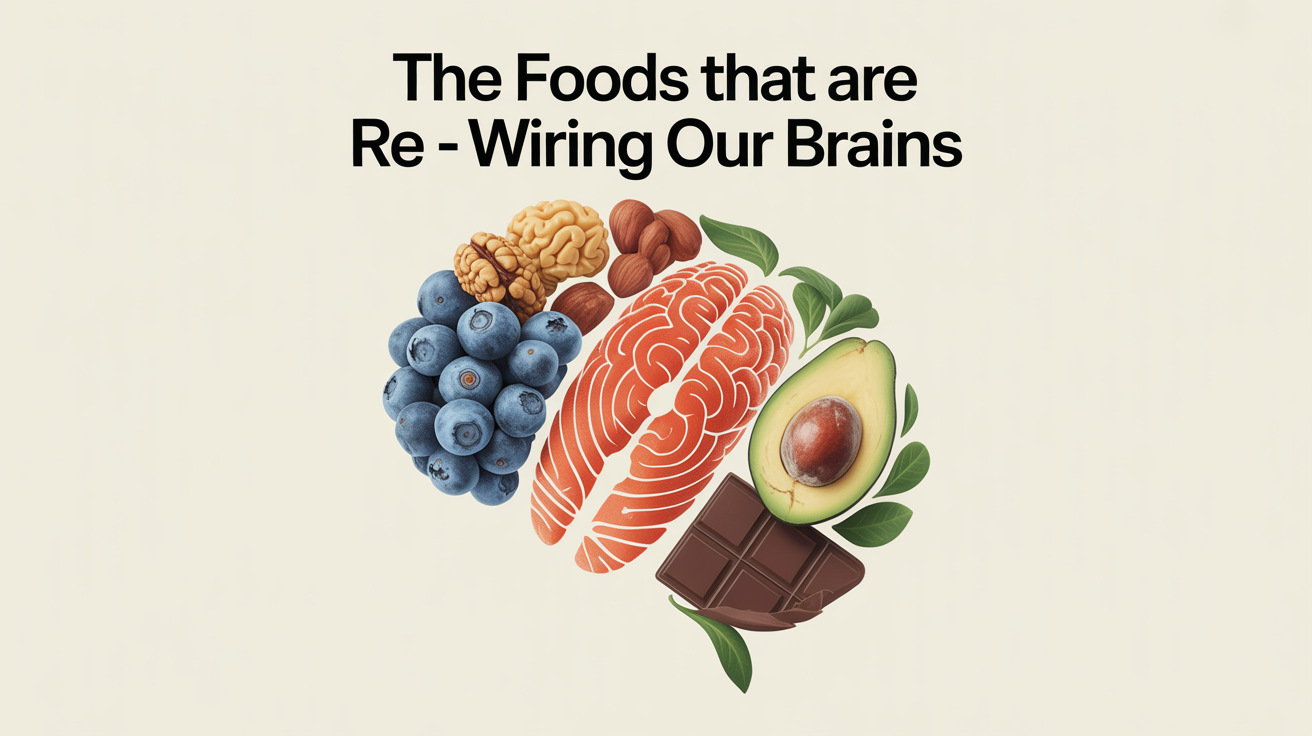
The Foods That Are Re-wiring Our Brains.
If you haven’t heard of ultra processed (UPFs) yet then you’ll either be scared by this article or nod your head with a little smirk of self righteousness knowing that you were right all along.
The crazy thing about ultra-processed foods is that they make it harder to stop eating them because they change how key brain regions work.
I’m sure you can relate, I see this almost every day with my kids. The sugar drive is crazy, whole days can be planned around how they get candy or sweets. The prolonged arguments I have with them about why they shouldn’t have seconds of ice cream are more like talking to a drug addict then a 12 year old.
My experiences are beginning to be backed up by the scientific community. Recent MRI research from Canada found that people who eat more UPFs show structural changes in the hypothalamus and nucleus accumbens, areas of your brain that regulate appetite and reward. The more UPFs people ate, the more likely they were to lose control over their intake and gain weight.
Other studies support this. Even a small daily high-fat snack can shift brain circuitry over time. Researchers describe UPFs as engineered to stimulate the pleasure centres with an intensity the brain wasn’t built to handle. The effect resembles how nicotine hijacks normal signalling pathways.
UPFs show up everywhere. Ready meals, protein bars, flavoured yoghurts and condiments dominate kitchens. But recently I heard the term hyperpalatable. This just means the ideal combination of fat to protein to stimulate our reward centres more than conventional food.
When I started digging I found something that shocked me.
The food we eat today is not the same as the food we ate 30-40 years ago.
Beef has got significantly fatter meaning that it now hits the 50/50 ratio of fat to protein making it hyperpalatable and somewhat addictive but not as good for you as it once was.
Same things with many types of snacks, once upon a time a bag of chips or crisps, as we like to say in the UK, was a pretty bland affair but they are now a taste bud onslaught with brands like Doritos leading the way (read The Dorito Effect by Mark Schatzker).
The never ending list of emulsifiers and other additives just gets longer disrupting our gut microbiomes and sending our brain into a tail spin. But those things are easy to spot – if you need a chemistry degree to pronounce the names on the ingredients list you can probably assume it’s highly processed.
However some food items might appear healthy but hide the truth.
Supermarket bread often contains more salt per slice than a packet of chips/crisps. Salt sharpens cravings by boosting sweetness and intensifying other rewarding ingredients. High salt intake can raise inflammation, which affects the brain pathways that control appetite and fullness.
Fruit juices from concentrate, soft drinks, condiments and sweets rely on fructose. It causes fast blood sugar spikes and dopamine surges. This overstimulation reinforces reward-seeking and pushes people toward foods that deliver quick hits.
UPFs strip carbohydrates of fibre and micronutrients. Modified starches, cornstarch and potato starch appear everywhere. These break down fast and trigger sharp glucose spikes followed by crashes. Over time, the brain responds less to normal foods and craves the rapid stimulation from UPFs – like my kids – you get addicted.
Natural foods rarely combine both in large amounts. UPFs do. This pairing sends dopamine levels soaring – making them another hyperpalatable food. Research shows the brain encodes this combo differently, making it even more compelling and harder to moderate.
Bright colours, artificial flavours and engineered textures boost sensory impact. They create quick flavour bursts that fade fast, prompting repeated bites. These cues reinforce cravings in the same way packaging and branding do.
No single additive explains the addictive nature of these foods, the problem comes from a heady mix of marketing, taste engineering and many ingredients working together to push the brain toward wanting more.
Personally I’m not immune to the cravings of UPFs.
I’m not one of those people who says they never eat a chocolate chip cookie or go weak at the knees for some banana bread.
But the old classic 80/20 rule can apply here – don’t let the UPFs go over 20% and you’ll be better off.
Sure, I’ll get some kick back for that advice, because it should be more like 95/5 but I’m also a realist. If we want the average person to eat less UPFs let’s start at about 20%.
Actually, something I did in our house was say to the kids that they can eat as much candy as they want (this was after halloween) when they have had at least 7-8 servings of fruits and vegetables in the day prior to asking for candy.
You know what…it dramatically cut down their eating of UPFs. I wasn’t the “bad” man by telling them no, in fact I told them yes…but set a condition on it. Once the condition is met they are usually so full that they don’t want anything else to eat…ha ha…I feel like I outwitted the brain re-wiring
References.
Ultra-processed food intake and brain structure (UK Biobank MRI study)
Morys, F., Wang, M., Charpentier, C. J., Dagher, A., & Fellows, L. K. (2025). Ultra-processed food consumption affects structural integrity of feeding-related brain regions independent of and via adiposity. Scientific Reports, 15, 10324.
https://pubmed.ncbi.nlm.nih.gov/40213086/
UPF consumption, depression, inflammation, and mesocorticolimbic volume
Sabia, S., Kivimäki, M., Akbaraly, T., Stringhini, S., & Dugravot, A. (2023). Consumption of ultra-processed foods is associated with depression, mesocorticolimbic volume, and inflammation. Journal of Affective Disorders, 330, 191–199 https://pubmed.ncbi.nlm.nih.gov/37207947/

Over the last 10 years Ed has been building a YouTube library to help people manage their own pain or movement limitations and increase performance through exercise. He regularly adds videos so be sure to subscribe and visit regularly


"Oh My Gosh- I am ALREADY feeling relief after a few days! I used to wake up 2-3 times a night with shooting pain that anti inflammatories couldn't touch. Now I have been waking up just because I want to notice what it feels like to lay in bed pain free- THANK YOU!."

"When I first started with your program I was experience a lot of pain. Walking was difficult. I had to stop and catch my breath every few minutes and lean against a wall for support. Now when I walk with my husband we go for over an hour. I never had to sit down and stop...and, hardly any pain!!! 😊😊 I can’t thank you enough."
Frustrated that you aren't recovering fast enough?
Discover how to heal from illness and injury using movement, food and lifestyle.